




Legendary Australian actress and producer Claudia Karvan OAM is no stranger to challenging roles, but at the Women in Media conference in Sydney last week, she made clear that her proudest work hasn’t just been on screen, it’s been behind the camera, pushing for feminist storytelling in an industry where most decision-makers are men.
Reflecting on the origins of the hit Stan series Bump, Karvan said the show itself was born out of a moment of upheaval. She credited co-creator Kelsey Munro with sparking the idea while on maternity leave, when the realities of new motherhood collided with questions about whose stories are deemed worthy of screen time.
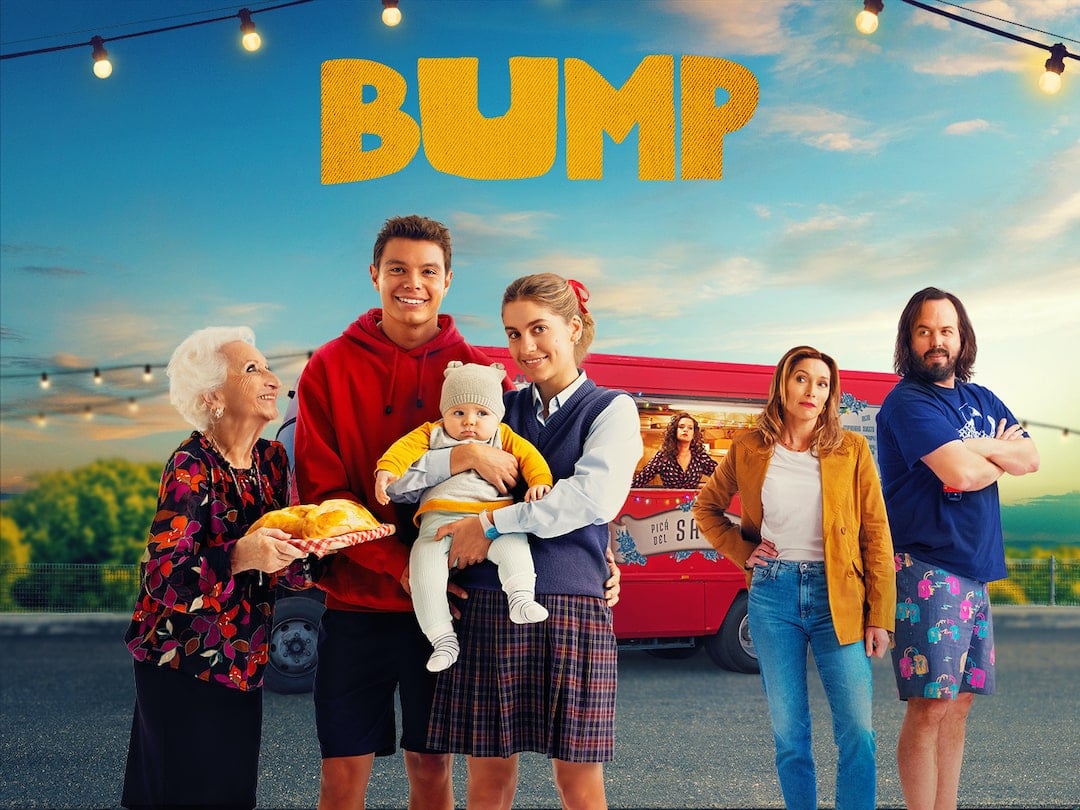
“She had the idea for Bump when she was on maternity leave, because her whole world was turned upside down, and she was thinking, who’s going to listen to a woman in her late 30s about having a new child. So she thought, what if it was about a really ambitious young girl who had a cryptic pregnancy?”
For Karvan, that moment of inspiration became a case study in how feminist storytelling often requires adapting to an industry that doesn’t immediately make space for it. Munro was proposing a story centred on motherhood, female ambition and reproductive realities, topics Karvan noted were rarely welcomed by “uniformly male commissioners.” To break through, the pair had to balance boldness with pragmatism, framing Bump as both entertaining and accessible while refusing to dilute its feminist core.
That approach became part of the show’s DNA. Karvan said they were conscious of “holding the hand of the audience” while still putting issues like menstruation, birth, feminism, and later environmentalism and mortality at the centre of the narrative. It was an ongoing exercise in compromise and creativity: finding ways to dramatise themes traditionally seen as “unsexy” or “difficult” without losing the warmth and humour that drew audiences in.
Against the odds, and in part thanks to the need to balance their slate after the male-focused shows like Wolf Creek and Romper Stomper, Stan commissioned the series.
For Karvan, making feminist television was never just about having women in charge or centring female themes; it also meant making sure that the world on screen reflected the real diversity of modern Australia. “When we first started Bump, we had this unenviable task of trying to find a whole lot of South American actors. South Americans had never really been on Australian television before. So there wasn’t a huge talent pool to pull from” .
She credited casting director Kirsty McGregor with ensuring that diversity wasn’t treated as an afterthought but as a creative principle woven into every decision. “She just always has an eye out for diversity. When she reads the script, she will say, does this character need to be male? Could they be female, could they be trans. Does this character need to be white? … She’s really vigilant and makes sure people are seen”.
That insistence on authenticity and representation paid off in one memorable case. Karvan recalled, “When Kirsty put the call out to the community, and Claudia Di Giusti did her audition… she doesn’t speak much English, a very, very strong accent, so she did everything in Spanish”.

The callout had been for a Chilean actress, but Argentinian Di Giusti ended up playing such a convincing Bernadita that they adapted the role. “We eventually were able to be so authentic and so thorough that we even specified that she wasn’t Chilean. We made it so she had come from Argentina and fell in love with a Chilean”.
Audiences noticed the detail, and the community held the production accountable.
For Karvan, this level of precision was about building trust. By casting authentically and leaving space for characters to be women, queer, trans, disabled or from different cultural backgrounds, Bump showed how feminist TV can broaden into a much bigger project: one that redefines who gets to be seen and heard on Australian screens.
Beyond the storylines, Karvan described her proudest legacy as the opportunities she has helped create for women working behind the scenes. Bump became a platform to spotlight emerging and overlooked talent who had long been shut out of key creative roles. She spoke about championing director Margie Beattie, who had been on the verge of giving up after decades without a break, by offering her a shadow directing opportunity that ultimately grew into full directing credits on the series and the Christmas movie.
The same approach extended across departments. A young editor, Jessie Hillebrand, was given her first major break through the show. At the same time, a costume designer with 20 years of on-set experience finally received a long-overdue design credit. For Karvan, these steps are a conscious strategy to open doors, build confidence, and ensure that skill and creativity are recognised. She said the greatest satisfaction of her role as producer has been empowering women to step into leadership positions across directing, editing, cinematography and design, and knowing that the ripple effects will shape the industry well beyond Bump.
“This is the best part of my job, being able to provide these opportunities to extremely talented people and empower them,” she said.
While Bump found a broad audience as a warm and life-affirming family comedy, Karvan is proud that the show was never afraid to open with moments that television traditionally shied away from.
This is a tone that was set in the very first episode, beginning with a teenage girl removing a menstrual cup filled with blood, moving quickly to a cryptic pregnancy and an unflinching depiction of birth, before the character recoiled from the baby with the line: “Get that thing away from me.”
These images weren’t designed for shock value, but to confront the realities of womanhood that are rarely shown on mainstream screens.
For Karvan, that willingness to put taboo subjects on screen was the very essence of Bump’s feminist DNA. The series leaned into menstruation, reproductive choice, birth trauma and motherhood without apology, yet still managed to be described as “warm and fuzzy.”
As she explained, the creative team deliberately “held the hand of the audience”, wrapping brutal truths in humour and family dynamics so that confronting subject matter didn’t alienate viewers but drew them into a deeper conversation.
That approach extended beyond reproductive themes to issues like climate change and mortality, topics rarely seen in commercial drama. Karvan said that writing storylines around the environment at a time when “there weren’t pretty much any successful dramas or comedies out there that had tackled it” was a deliberate act of defiance.
Through storylines about climate grief, bushfire smoke choking Sydney, and small “glimmers” of hope like solar power milestones, the show asked audiences to face ecological realities in a way that was both accessible and moving.
Her guiding principle was that silence serves no one, especially when it comes to feminist or political storytelling. Television, she argued, has the power to normalise conversations others avoid, whether about periods, environmental collapse, or death.
For Karvan, Bump is proof that feminist TV can thrive in a male-dominated industry if women support women, fight for authenticity and never stop tackling the stories others avoid.


