



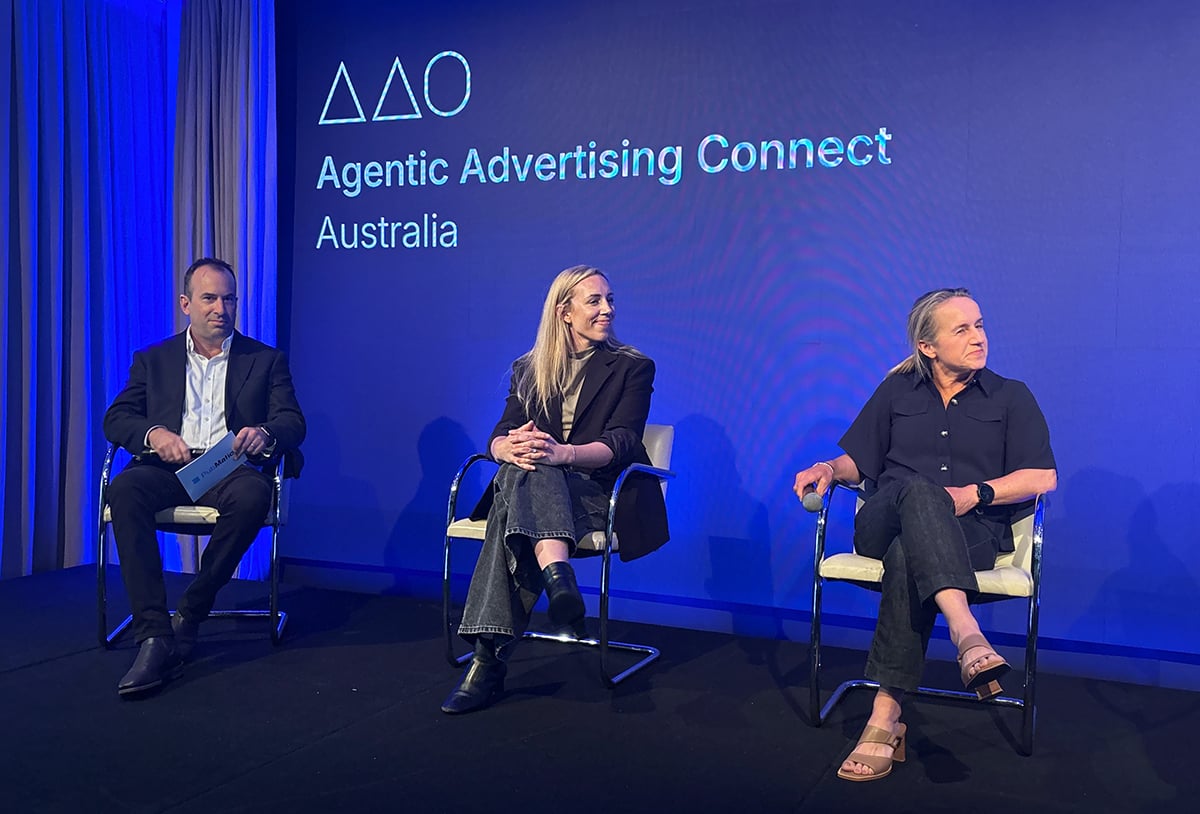
AI-powered DSPs, adtech platforms with LLM integrations and agentic technology could be set to handle nearly two-thirds of all media spend by the end of 2028, according to experts on a recent panel discussion at the AAO conference in Sydney.
Omnicom’s GM of centre of excellence, Georgina West, said the holding company was still at the early stages of its AI adoption, but anticipated agentic capabilities would play a much bigger role in media trading over the next two years.
When asked to put a figure on how much advertising spend could flow through AI-powered platforms by the end of 2028, West suggested 65 per cent.
However, she stressed that greater automation would not remove the need for human involvement, particularly when it came to accountability, decision-making and understanding clients’ businesses.
“Humans are still going to be critical because we need accountability,” she said. “We still need that decisioning to be human. We bring the emotion, we bring the understanding, and that human connection.”
West said translating a client’s business objectives into a brief required context and human understanding, while continued oversight would be necessary to ensure AI agents operated as intended.
“We need the oversight throughout to ensure that the agents don’t go rogue, because we know that they also do that,” she said.
West appeared on a panel alongside News Australia’s head of supply and agentic trading, Paul Oyama; agentic media consultant Ros Allison; and Mamamia’s national sales director, Lanai Wiadrowski.
Moderated by PubMatic’s senior director of CTV APAC, Luke Smith, the discussion explored how AI agents could reshape the advertising industry, including the future of programmatic buying and the role humans will play as automated systems take on more responsibility.
West’s prediction aligned with Oyama’s, who also predicts half of global advertising spend will be run through buyer agents or AI-powered platforms and tools by the end of 2028.

“My prediction is that in the next 24 months more than 50 per cent of global ad spend will be run through a buyer agent or some kind of AI-powered platform or tool, so it could be a GPT or it could be a DSP,” he said.
In Australia, much of digital advertising is already traded programmatically through demand-side platforms (DSPs), such as The Trade Desk, Google’s Display & Video 360 and Yahoo DSP, which automate the buying and placement of ads across digital channels.
However, the growing use of generative AI tools such as ChatGPT, Google Gemini and Claude could see AI play a more active role in media buying, moving beyond automating transactions to making decisions about where and how advertising spend is allocated.
The forecasts highlight a potential shift in the way advertising budgets are planned, bought and optimised, with AI agents increasingly involved in executing transactions that have traditionally relied on human-led workflows and programmatic technology.
Despite predictions about AI agents taking over parts of media buying, industry commentary has highlighted the risks of handing too much control to automated systems.
In a recent article, Digiday explored both sides of the debate, with industry experts warning that while agentic tools could improve transparency and cut out unnecessary intermediaries, they could also introduce new layers of opacity. Some argued that AI should support repetitive tasks rather than replace human buyers, with experienced practitioners remaining responsible for strategy, commercial decisions and accountability.
Yahoo also reported earlier this month that while AI agents are expected to reshape media buying, human strategists will remain central to setting the agenda, with Omnicom Media chief investment officer Maureen Bosetti arguing brands must continue to put consumer behaviour ahead of channel selection.
The predictions also follows B&T’s recent interview with Profound CEO and co-founder James Cadwallader, who said personal AI agents could eventually “handle the whole process” of searching for products, comparing options and completing purchases, potentially changing how consumers discover and buy from brands.
And while the panel’s predictions suggest agentic AI could become a significant force in media trading within the next two years, West’s comments also highlighted a key question facing the industry – how much decision-making can be handed to machines while keeping humans accountable for the outcomes?